How can a freight rate management tool centralize my spot, contract, and surcharge data?
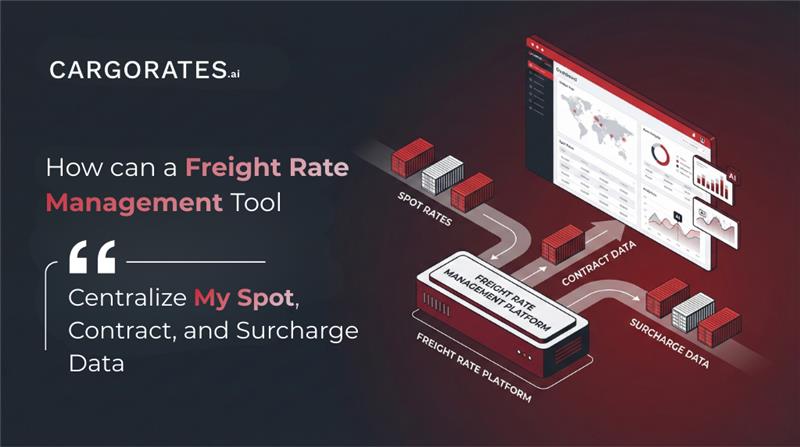
A modern freight rate management tool centralizes your spot, contract, and surcharge data by ingesting rates from all sources, normalizing them into a single structure, applying logic for margins and surcharges, and then making that data searchable in seconds across lanes, modes, and customers. It becomes the single source of truth your pricing and sales teams use for every quote.
Now let's unpack what that actually looks like in a real forwarder / NVOCC / BCO environment.
Why your rate data is fragmented in the first place
If you're like most teams, your pricing inputs are spread across:
- Carrier and NVOCC contracts in shared drive folders
- Spot rate emails from multiple carriers and co-loaders
- Excel-based "master rate sheets" maintained by one or two pricing champions
- Surcharges and accessorials sitting in PDFs or scattered internal docs
- Regional versions of the "same" rate file with different expiry dates
Industry studies and leading rate-management vendors consistently highlight centralized rate storage as the foundational capability: all contract rates, spot quotes, and surcharges need to live in one place, not dispersed across email threads and local folders.
Until that happens, every quote is a small investigation, not a repeatable process.
What "centralization" actually means (beyond marketing buzzwords)
Most vendors say, "We centralize your rates." What matters is how.
A serious freight rate management tool typically does four things under the hood:
1. Ingests data from every source
- Carrier / NVOCC contracts (FAK, NAC, named accounts)
- Spot feeds, APIs, or structured files
- Surcharge and accessorial tables (Bunker, THC, GRI, PSS, inland, detention/demurrage rules)
- Mode-specific data (FCL, LCL, air, trucking)
2. Normalizes that data into a single model
- Standard lane structure (POL, POD, via, inland legs)
- Container/equipment logic
- Validity periods and free time rules
- Currency and unit conversions
3. Stores it in one searchable rate engine
- "Show me all valid rates for Shanghai → Los Angeles, 40HC, next 30 days"
- "Compare this customer's contract vs today's spot across 3 carriers."
4. Applies business rules on top
- Margins by trade lane/customer segment
- Priority logic (e.g., named account → contract → spot fallback)
- Surcharge bundles, mark-ups, and minimum charges
Most of the other freight management platforms available in the market emphasize centralized rate and contract storage, plus real-time rate comparisons as the core of their value proposition.
Where many of them stop short is going deeper on surcharge governance, multi-mode logic, and customer-specific pricing intelligence. That's the gap cargorates.ai is built to close.
How spot, contract, and surcharge data behave very differently
To centralize your pricing, a tool has to respect the nature of each data type.
1. Spot rates: fast, volatile, and time-sensitive
Spot rates are:
- Short-lived and highly volatile
- Delivered via APIs, portals, and frequent file updates
- Often linked to capacity/space conditions, not just base cost
A good system will:
- Pull spot rates automatically where possible
- Tag them by received date, validity date, carrier, and channel
- Let your team compare spot vs contract vs customer target instantly
We explored this in more detail in the article on where to compare freight spot rates before booking.
2. Contract rates: structured, layered, and political
Contract rates:
- Have complex structures (FAK, NAC, named accounts, tiered volumes)
- Carry negotiated conditions, free time, and penalties
- Live across multiple PDFs, addenda, and emails if not centralized
A strong platform:
- Digitizes contracts into structured, searchable entries
- Manages rate versioning and expiry alerts so no one quotes from the wrong file.
- Allows side-by-side analysis: contract vs alternate carriers vs spot
3. Surcharges: small numbers, huge impact
Surcharges quietly drive:
- Margin erosion (when missed or misapplied)
- Disputes with customers and carriers
- Variation between "what we quoted" and "what we invoiced."
Most tools underplay surcharge logic. A better approach is to treat surcharges as first-class data, with:
- Central surcharge tables (per lane, carrier, mode, period)
- Clear ownership and update workflows
- Automatic inclusion in every quote and what-if scenario
When a freight rate management tool gets this right, your "all-in" quotes finally become truly all-in.
What centralization looks like in daily work (micro-scenario)
Imagine your team receives this RFQ:
"Need rates for 2 x 40HC, Shanghai → Long Beach, weekly for three months. Compare our contract rates vs spot. Include origin dray, THC, and on-carriage to our warehouse."
In a fragmented world, that means:
- Digging up the contract file from a shared folder
- Checking if there was a GRI last week
- Logging in to 2–3 carrier portals for spot
- Asking ops for the latest surcharges
- Manually building an Excel to compare options
In a centralized world with a freight rate management tool like Cargorates.ai:
- You enter the lane, equipment, and dates once.
- The platform pulls:
- Valid contract rates
- Latest spot rates from integrated carriers and NVOCCs
- All applicable surcharges and inland legs
- It displays:
- All-in cost per carrier (base + surcharges + inland)
- Transit time and schedule information
- Margin projections based on your rules
- You click to generate:
- A customer-ready quote
- Saved scenario for future reference
- Pipeline entry for win/loss analysis later
That's centralization in action: one screen instead of five tools and three people.
How CargoRates.ai centralizes your spot, contract, and surcharge data
CargoRates.ai is built specifically as an AI-powered freight rate management tool for NVOCCs, forwarders, and BCOs, backed by 20+ years of logistics technology experience from Info-X.
Here's how it tackles each layer of centralization:
1. Unified rate workspace across modes
- Centralizes spot and contract rates for ocean, air, and trucking in one platform
- Supports FCL, LCL, air cargo, and inland movements with mode-aware logic
- Let your team quote and respond in real time from a single dashboard
If you want a deeper overview of why real-time quoting is non-negotiable now, the article on why 2025 is the year of instant freight quotes ties it all together.
2. Central contract and spot libraries
- Imports carrier contracts and spot feeds into a structured library
- Manages rate version control, ensuring your teams only work with valid files
- Supports lane- and customer-specific rate agreements without duplicating data
Other platforms may centralize contracts, but Cargorates.ai is explicitly built around contract + spot comparison in one flow, not as two separate modules.
3. Surcharge and fee engine
Surcharges are integrated at the contract level and automatically applied during every rate lookup. Cargorates.ai ensures that all-in pricing is always accurate, consistent, and margin-protected. No missed fees, no hidden adjustments, no manual lookups, just a clean, governed surcharge workflow built directly into your rate engine.
This capability eliminates the operational overhead of managing external files or parallel surcharge sheets.
4. Smart pricing and margin controls
Centralization isn't just storage — it's about pricing intelligence:
- Margin rules by lane, customer type, or segment
- Auto-calculated buy vs sell spreads
- Guardrails that prevent under-quoting or accidental discounting
5. Customer-facing portal & integrations
Because all your data lives in one place, you can safely expose it via:
- Digital customer portals where selected rates are visible to clients 24/7
- API integrations into your TMS/ERP so quotes and bookings don't require re-entry
- White-labeled experiences that let customers "self-serve" quotes based on your central rate engine
This is where centralization flips from "back-office convenience" into commercial advantage.
What modern freight teams actually gain from centralization
When spot, contract, and surcharge data all live in a single, governed platform, you don't just tidy up your data. You change how your business competes:
- Faster RFQ responses → quotes sent in minutes, not hours
- Better win rates → competitive, accurate, and consistent pricing
- Stronger margins → fewer missed surcharges, better margin guardrails
- Cleaner audits → clear trace of which rate & surcharge drove each quote
- Happier teams → less time searching for files, more time serving customers
Across the market, leading rate-management providers and analysts agree:
Centralizing rate and surcharge data is now basic infrastructure for modern logistics operations.
What Modern Freight Teams Are Asking About Rate Centralization
A freight rate management tool centralizes pricing by pulling every rate source—spot feeds, carrier contracts, NVOCC tariffs, accessorial charges, inland costs, and validity rules—into a single structured environment. Instead of handling PDFs, emails, and spreadsheets, the platform transforms all inputs into normalized data that aligns by lane, mode, equipment, and date range. This gives pricing teams one searchable, real-time source of truth for every quote they produce.
Yes. A modern tool automatically identifies which spot and contract rates are valid for the lane and date of the request, then presents them side-by-side so you can instantly compare buy rates, transit expectations, and total landed cost. This removes the need to hop between portals and spreadsheets, and it allows forwarders to judge whether a contract rate or a live spot update is more competitive at the moment of quoting.
Surcharges are no longer scattered across documents or manually added by individuals. When centralized, they become governed data that the system applies automatically based on carrier rules, geographic conditions, and validity periods. This eliminates guesswork, avoids missed or outdated charges, and ensures that every quote reflects a true all-in price rather than a base rate with uncertain add-ons. Centralized surcharge logic is also the most effective way to prevent unexpected margin erosion.
Centralization transforms quoting from a slow investigative task into a real-time decision-making process. Pricing teams respond dramatically faster because all rates, surcharges, and rules appear in one view. Accuracy improves because everyone references the same governed data instead of personal spreadsheets. Margin protection becomes stronger because the system enforces current rates and applies the correct commercial rules. Centralization ultimately improves speed, consistency, customer trust, and revenue performance.
CargoRates.ai consolidates spot feeds, carrier contracts, surcharge tables, and customer-specific pricing into a unified AI-powered rate engine. The system evaluates all active buy rates, applies the appropriate fee structures, calculates selling logic, and presents the complete result in an instantly usable quote. This removes the manual friction that typically slows down forwarders and helps teams work from a single, synchronized source of pricing across all modes and corridors.
Advanced platforms support all major modes by interpreting the unique characteristics of ocean, air, and trucking rates and treating each with mode-specific logic. This allows a forwarder to manage FCL, LCL, air freight, and inland charges from a single workspace rather than juggling separate files for each mode. The result is a cohesive pricing workflow where every service category is handled with the same level of accuracy and transparency.
Conclusion
A freight rate management tool centralizes your spot, contract, and surcharge data by pulling every rate source into one structured engine, normalizing contracts and live spot feeds, governing surcharges through shared rules, and making it all instantly searchable for quoting across modes, lanes, and customers. Platforms like Cargorates.ai turn that centralized data into real-time, surcharge-inclusive quotes that protect your margins and help your team win more freight with less effort.
