Blog

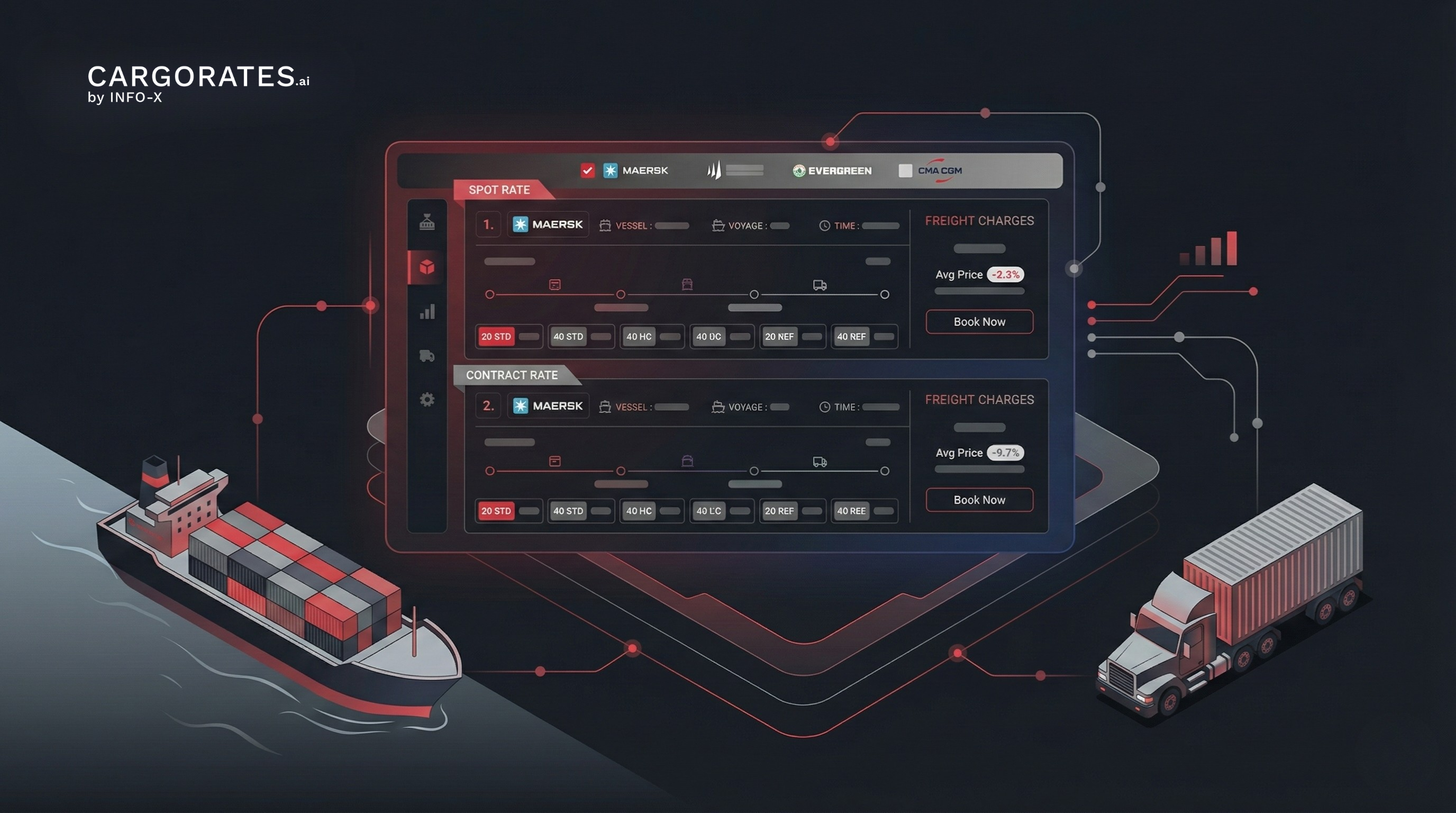
Comparing online freight rate offers requires more than price comparison. The best option is the rate that reflects real-time market conditions, includes fuel and accessorials, and aligns with execution reality. Centralized freight rate management platforms enable logistics teams to compare spot and contract rates accurately and choose decision-ready options.
Comparing online freight rate offers is no longer just about finding the lowest price.
For shippers, freight forwarders, and logistics teams, the real challenge is choosing a rate that is accurate, executable, and margin-safe.
With dozens of digital tools now offering instant quotes, many teams struggle to determine which freight rate is actually usable and which one will break at booking, execution, or invoicing. This guide explains how to compare multiple online freight rate offers properly, what signals matter most, and how modern freight rate management platforms help teams make confident decisions in real time.
At first glance, comparing freight rates seems simple. You enter shipment details, receive multiple prices, and choose the cheapest option.
In practice, this approach creates risk.
Freight rates vary based on:
Two rates that look identical on the surface can produce very different outcomes once the shipment moves. This is why experienced logistics teams focus on rate quality, not just price.
Before comparing prices, the first question should be: What does this rate represent?
Many online freight rate offers fail because they:
A usable freight rate should reflect total transportation cost, not just linehaul. If a rate does not clearly account for fuel, accessorials, and service conditions, it should be treated as an estimate, not a decision-ready option.
One of the most important distinctions when comparing online freight rate offers is whether the pricing is real-time.
Cached or static rates:
Real-time freight rates, by contrast, reflect current carrier pricing and spot market behavior. This is especially critical when evaluating time-sensitive lanes or volatile markets, as explained in this guide on using real-time freight rates to book directly instead of relying on outdated quotes.
When comparing offers, always prioritize tools that update pricing dynamically throughout the day.
A common mistake in freight rate comparison is treating spot rates and contract rates as separate workflows.
In reality, the best option depends on:
Modern logistics teams compare spot and contract freight rates together at the quoting stage. This allows them to choose the most cost-effective and operationally reliable option for that specific shipment, rather than defaulting to one pricing model.
The lowest freight rate is not always the best option.
When comparing offers, consider:
Rates that frequently change after booking introduce operational friction and financial uncertainty. This is why experienced teams favor rate offers that are surcharge-inclusive and rule-driven.
Comparing freight rates across emails, spreadsheets, carrier portals, and multiple tools creates blind spots.
Effective freight rate comparison requires:
Centralized freight rate management platforms enable teams to evaluate multiple offers in context, not isolation. This approach also reduces manual effort and speeds up decision-making, especially for high-volume quoting environments.
Instant rate comparison is not about speed alone.
It improves decision quality by allowing teams to:
This is closely tied to how instant LTL and FTL rates are generated and validated, as outlined in this related guide.
When rate comparison is powered by real-time data and consistent logic, it becomes a strategic advantage rather than a transactional step.
In today's market, freight rate comparison is no longer a back-office task. It directly impacts:
Teams that treat rate comparison as a governed, data-driven process consistently outperform those relying on manual or fragmented tools.
This is why cargorates.ai is increasingly used as a freight rate intelligence layer, helping logistics teams compare multiple online freight rate offers with confidence rather than guesswork.
Choosing the best freight rate is not about finding the lowest number on a screen.
It's about selecting a rate that is accurate, executable, and aligned with real market conditions.
When online freight rate offers are compared using real-time data, surcharge-inclusive logic, and centralized intelligence, logistics teams can make faster decisions without sacrificing reliability or margin.
That is the difference between comparing prices and managing freight rates strategically.